Two years ago, the phone call that killed a Sisters transaction was almost always about price, condition, or the appraisal. In 2026, it's about a binder. A buyer goes under contract, requests a homeowners quote, and finds out the carrier won't write the property. Or the quote comes back at twice what the buyer's lender used to qualify them. Or the seller's own renewal notice arrives during escrow and quietly changes the math on everything.
If you're buying or selling in Sisters Country right now, the insurance market is the friction you plan around, not the friction you discover at day 22 of a 45-day close. Here's what's actually happening on the ground, and the specific moves that keep a deal together.
The deal-killer nobody prices in
The most public case came out of Camp Polk, a few miles north of town. Central Oregon Daily reported that Farmers non-renewed roughly 200 policies in the area. One homeowner, Karen Whisler, replaced her Farmers policy with Allstate and watched her annual premium go from $5,000 with a $500 deductible to $10,000 with a $10,000 deductible. That is not a rate adjustment. That is a different product entirely.
Zoom out and the pattern is statewide. Oregon property insurance premiums are up more than 27% since 2020, according to Consumer Federation of America data cited by OPB in January 2026. The state also had its most expensive fire season on record in 2024, with suppression costs above $350 million. Carriers price forward, not backward, and Sisters sits in the terrain those models flag.
The thesis of this post is simple. In Sisters in 2026, insurance is the most common reason a transaction falls apart, and the July 2025 repeal of Oregon's wildfire hazard map did not change that. It may have made it worse, because it removed the one lever the state had over what "wildfire risk" was allowed to mean.
What the map repeal did, and what it didn't
Senate Bill 83, signed by Governor Kotek on July 24, 2025, repealed the statewide wildfire hazard map, along with the defensible space rules and building code standards that were tied to it. It also removed the map from seller property disclosures. A companion measure, SB 85, directed state agencies to work with the insurance industry on mitigation incentives, with a report due February 2, 2026.
Here's the part that trips people up. Under Oregon law, insurers were never allowed to use the state map to cancel a policy, decline a renewal, or raise a premium. That prohibition sits in ORS 742.278. Carriers use their own proprietary models, which is what OPB, ProPublica, and the state Department of Consumer and Business Services have all confirmed. Repealing the state map did not reach into the carriers' models. It only removed a public reference point that everyone could see and argue about.
For a buyer in Sisters, the practical translation is that "the map is gone" doesn't help you get insured. You still need to satisfy whichever carrier your independent agent can place you with, on that carrier's rules.
The non-renewal notice usually isn't about you or your house. It's a geographic or portfolio decision, and it comes with 30 to 60 days of advance notice under Oregon law. That window is your entire runway to replace coverage.
The three phone numbers in town
Sisters has a thin bench of local agencies, which is part of why the market feels tighter here than the same problem might feel in Bend. The Nugget reported in March 2025 that the Sisters Farmers office run by Jason Rybka would close in June, given how much of that book was affected by the non-renewals. Country Financial's local agent, Linda Alldredge, was set to retire at the end of May. That left Risk Strategies, formerly Bisnett Insurance, as the primary independent agency in town representing multiple carriers.
If you're a buyer, the shape of the local agent market matters because captive agents can only quote one carrier. If that one carrier declines your property, a captive agent cannot help you. An independent agent can shop admitted carriers and, when needed, the surplus lines market. That distinction is often the difference between closing and not closing.
The Oregon FAIR Plan is the state's insurer of last resort. It exists so that no Oregon homeowner is left entirely without fire coverage, but the coverage is basic. It covers the dwelling for fire and certain other perils. It typically doesn't include liability, personal property, or additional living expenses, and it usually costs more than comparable coverage in the standard market. Treat it as a bridge, not a destination.
The mitigation checklist that actually moves the needle
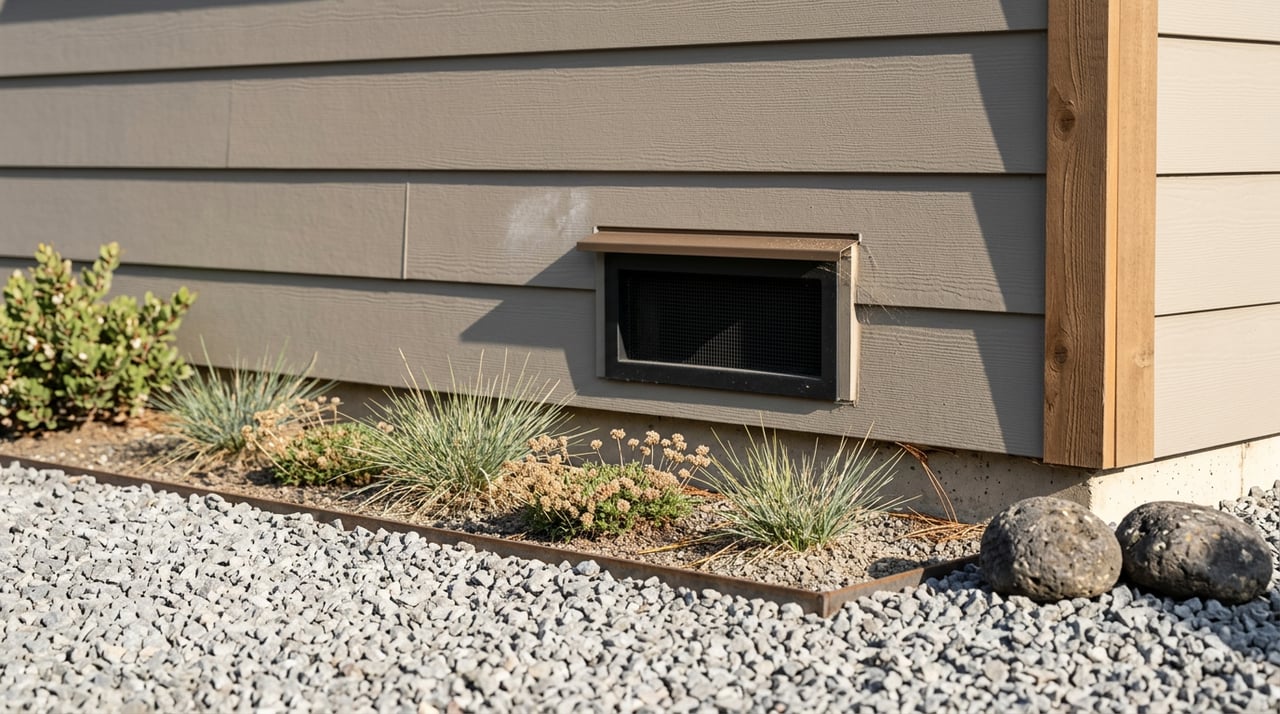
Deschutes County and the City of Sisters adopted Oregon's R327 wildfire mitigation building code in 2026. R327 sets construction standards for new homes in higher-risk areas, including ember-resistant vents. Retrofitting existing homes with compliant vents is one of the cheapest single things a seller can do to widen the pool of carriers willing to quote a buyer.
For an existing home, the underwriting-relevant work usually falls into these buckets:
- Zone 0, the first five feet around the structure. No combustible mulch, no wood fencing attached to the house, no firewood stacked against siding. Replace with river rock, gravel, pavers, or concrete. Embers cause the majority of structural ignitions, and this buffer is the single most heavily weighted item in most carrier models.
- Roof. Class A materials — asphalt fiberglass composition shingles, clay or concrete tile, certain metal products. A worn Class A roof still underwrites better than a newer non-rated one.
- Vents and eaves. Ember-resistant vent screens, boxed eaves, no open soffit venting. This is the R327 point of emphasis and often the cheapest fix on the list.
- Deck and fence connections. A wood deck ledgered directly to a hardened house is still an ignition pathway. Composite, metal, or concrete decking within Zone 0, or a non-combustible break within five feet where wood fencing meets the structure.
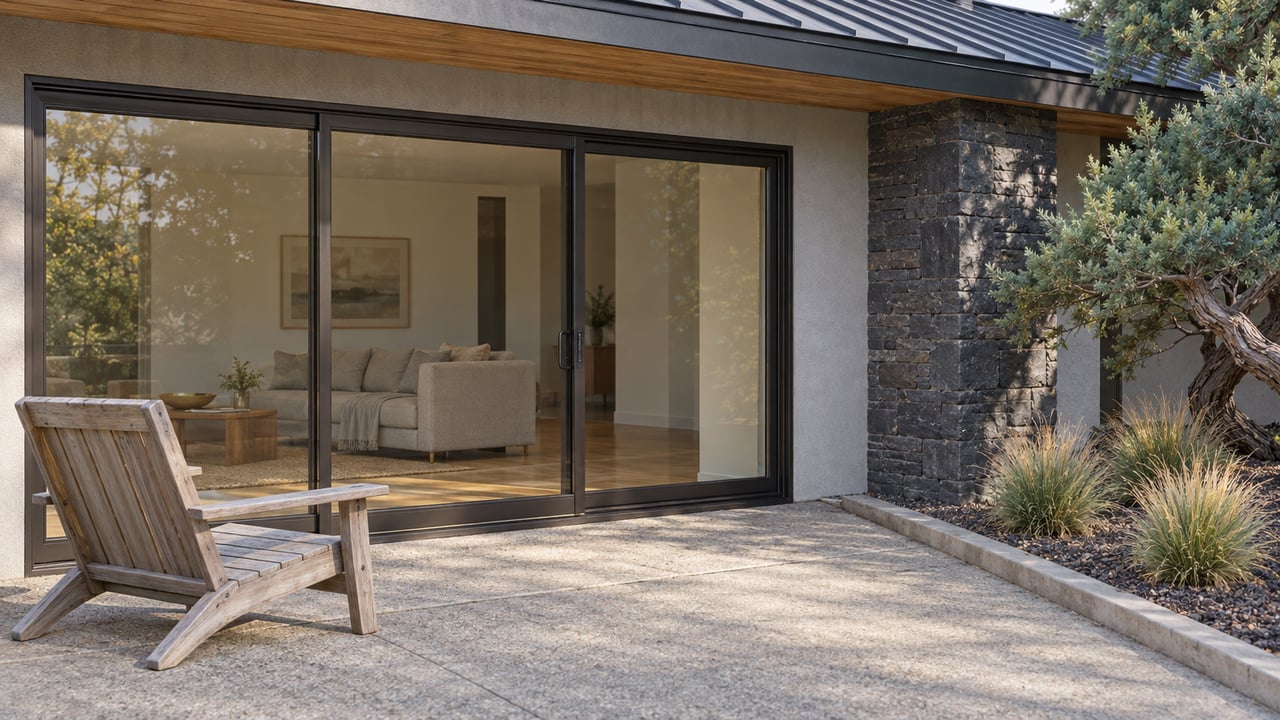
- Windows. Dual-pane or tempered glass. Single-pane glass tends to crack from radiant heat before flames ever arrive.
- Documentation. Photos of all four sides of the home with the Zone 0 buffer intact, plus receipts. Carriers and the IBHS Wildfire Prepared program both want evidence, not assurances.
The Insurance Institute for Business and Home Safety's Wildfire Prepared Home designation is the certification that shows up most often in carrier discount conversations. Oregon's State Fire Marshal signed an agreement with the Insurance Institute to route certified homeowners toward lower rates and premiums, per OPB's January 2026 reporting. Sisters-Camp Sherman Fire District also offers free defensible space inspections, which is the right first call before you spend money on any of the above.
The 30-day clock hiding inside your 45-day escrow
Insurance timing used to be a formality. In Sisters in 2026, it belongs on the transaction calendar as its own critical path. A rough working schedule looks like this.
| Escrow week | Insurance action |
|---|---|
| Week 1 | Request quotes from at least one independent agency; disclose any prior non-renewals on the property. |
| Week 2 | Order defensible space walk-through, ideally with Sisters-Camp Sherman Fire District. Confirm roof class and vent status. |
| Week 3 | Complete Zone 0 corrections that the seller is willing to make; document with photos. Bind or verbally confirm the quote. |
| Week 4 | Lender receives evidence of insurance. Any surplus lines placement gets its policy documents finalized. |
| Week 5 | Buyer signs, funds, closes. First-year policy paid at closing. |
If a quote is contingent on mitigation work the seller has not agreed to, that is a negotiation to open in week one or two, not week four. This is the point where most Sisters deals either lock in or start slipping.
If the non-renewal letter arrives mid-transaction
Sellers occasionally get the letter during escrow. It is not, on its own, a reason for a buyer to walk. It is a reason to shift the insurance conversation from the buyer's future policy to the property's underlying insurability. If Carrier A won't renew, the question is whether Carriers B, C, and D will write it, and on what terms.
ORS 742.277 requires the non-renewal notice to describe the property-specific characteristics that drove the decision and the mitigation actions the insured could take to improve insurability. Read that section of the letter before anything else. It is often a road map to the changes that will re-open the market on that property, whether the current owner does them or the buyer negotiates them into the deal.
FAQ
Do I still have to disclose wildfire hazard on the Oregon seller property disclosure? The map-based disclosure item was removed by SB 83. That does not eliminate a seller's general duty to disclose material facts they actually know about the property, including a history of non-renewal notices or prior insurance losses. When in doubt, disclose in writing.
Will the FAIR Plan satisfy my lender? Lenders generally require dwelling coverage at replacement cost with a mortgagee clause. FAIR Plan policies can meet that basic threshold, but they typically leave the borrower without liability or contents coverage, which most buyers then fill with a separate "difference in conditions" policy. Confirm the full package with your lender before closing.
How much time does mitigation actually take? Zone 0 corrections and vent retrofits are usually a weekend of work and a few hundred to a few thousand dollars in materials. The IBHS Wildfire Prepared designation is a longer process because it requires third-party verification. If insurance is the friction on a specific deal, prioritize the Zone 0 buffer and vent work first, then pursue certification after closing.
At Ninebark Real Estate, we treat the insurance question the same way we treat the inspection question: as a real contingency with real deadlines, worth naming out loud on day one instead of day twenty. If you're weighing a purchase or a sale in Sisters and want a clear read on how a specific property is likely to underwrite, get a free home valuation and we'll walk through the full picture with you.