What if the single most-cited statistic about Redmond housing right now, the one that shows up first on every portal, is describing a city that doesn't actually exist? Over the three months ending May 2026, Redfin put Redmond's median sale price at $470,000, down 10.1% year over year. Zillow's home value index for the same window landed at roughly $501,000 to $517,000, down less than 1%. Movoto's June 2026 median came in at $535,000. Same city, same month, three different stories.
The gap isn't a data error. It's the sound of three different Redmonds being averaged into one number, and once you separate them, the affordability question buyers ask on the drive over from Bend has a very different answer than the portals suggest.
The three Redmonds hiding inside one median
Redmond in mid-2026 is not one market. It's three, and they price independently.
Established east and southeast resale. Older ranches, cul-de-sacs on the quieter side of US-97, some manufactured-home parks, mountain views on a clear day. Entry-level inventory in the $380,000 to $430,000 band still exists here, largely in older construction or on the edges. This is the part of Redmond that pulls the citywide median down.
New-build subdivision Redmond. Concentrated in the northwest, southwest, and north corridors: Obsidian Trails in SW Redmond, Fieldstone Crossing off NW 28th and 29th, Juniper Crossing near the airport, and the Spruce Northwest subdivision, which the city's planning division recently approved to restructure into Phase 4A and 4B. Newer builds in Obsidian Trails and Fieldstone Crossing push into the $520,000 to $600,000 range, with individual resales in Fieldstone Crossing currently pending in the $635,000 to $639,000 range for 2,400 to 2,600 square feet. This tier pulls the median up.
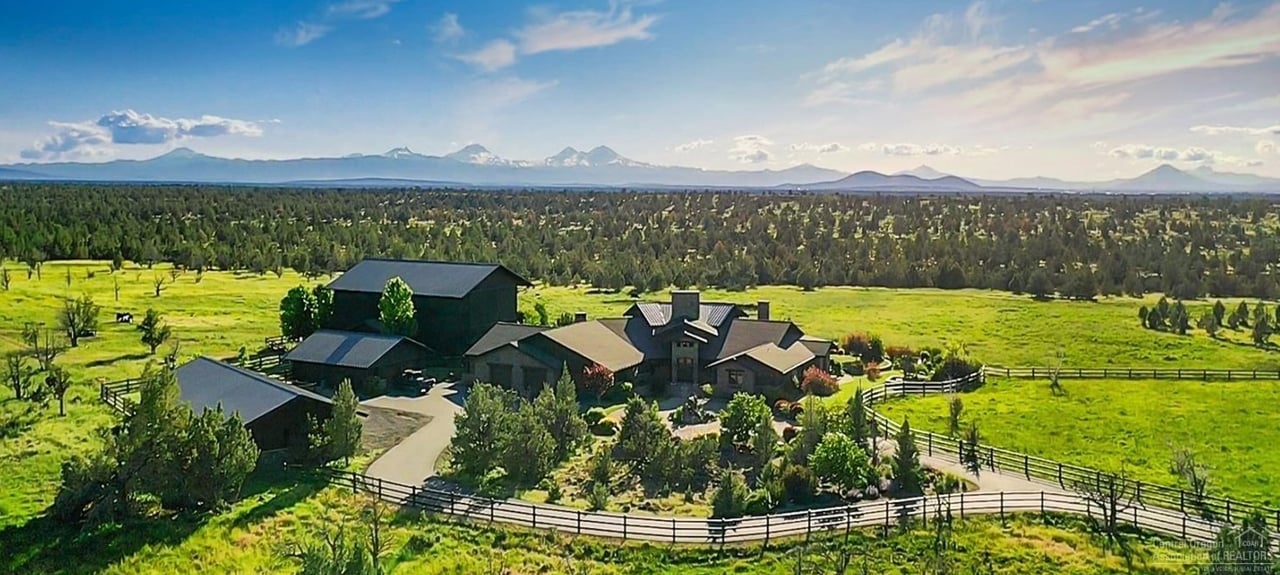
Rural-luxury edge. Small in unit count, large in dollar impact. The clearest 2026 example is Peaks 360, a 70-home development on 710 acres at the end of Coyner Avenue between Redmond and Sisters. The Redmond Spokesman reported on July 8, 2026 that developers received final approval this spring after a four-year process and are now moving on road construction. Central Oregon LandWatch and 1000 Friends of Oregon have a petition before the Land Conservation and Development Commission challenging Deschutes County's rezoning pattern, so this tier of Redmond-adjacent inventory may be capped by policy before it fully expands.
If you're comparing "Redmond" to "Bend" on a single median, you're comparing three markets to one. The affordability gap the portals imply, roughly $200,000 between Redmond's high-$400s and Bend's $700-plus, only holds if you're actually shopping in the same tier on both sides.
The number that isn't in the median at all
Here is the part the portals cannot show you.
When a builder in a Redmond subdivision offers a 2-1 rate buydown, a permanent buydown to something in the mid-4s or low-5s, or a closing-cost credit worth $15,000 to $40,000, none of that shows up on the recorded sale price. The house closes at list. The MLS logs the number. Zillow, Redfin, and Movoto ingest the number. The buyer's actual monthly cost is meaningfully lower than the number suggests, and the buyer's actual out-of-pocket at closing can be $10,000 to $20,000 lower too.
Kiplinger's coverage of builder mortgage incentives in mid-2026 put it plainly: rate buydowns and closing credits let a builder advertise a lower monthly payment without officially reducing the price, which protects perceived neighborhood value. Zonda's most recent survey found that roughly 60% of new-home communities were offering incentives on to-be-built homes and 78% on quick move-in homes. Realtor.com's analysis found new-home buyers were getting close to a full percentage point break on their 30-year rate compared to existing-home buyers.
A resale three blocks from a new build can be listed for $40,000 less and still cost the buyer more per month, because the resale seller isn't paying two points to buy the rate down.
This is the mechanism most Bend-to-Redmond shoppers miss. They see the median difference between the two cities, assume Redmond is uniformly cheaper, and then find that the new-build streetscape they actually want to live on prices closer to Bend than the citywide number promised, before incentives, and closer to expectations after incentives are factored in.
What Bend spillover buyers actually get for the gap
The other side of this: Redmond genuinely is more affordable than Bend for a comparable house, and the affordability isn't a mirage. It's just distributed unevenly.
Redmond's price per square foot ran roughly $304 to $322 in the spring of 2026, depending on source. A 1,500-square-foot home at that rate lands around $460,000 to $483,000. A 2,000-square-foot home clears $600,000. Days on market pulled apart the same way the median did: Redfin showed 26 days for the three months ending May; Movoto showed 72 days for June closings. The likely explanation is the same three-market problem. Resale in established Redmond moves quickly. Newer builds sit longer, because buyers are working through incentive math and construction timelines.
Property tax is the other line item that doesn't behave the way buyers assume. Redmond's effective rate runs approximately 0.72% of assessed value, which is at the higher end within Deschutes County. The county median sits around 0.62%. Sunriver runs closer to 0.49%. On a $500,000 Redmond home, that's roughly $3,500 to $3,600 a year, still lower than what a comparable buyer would pay in Washington or Idaho, but not the lowest option inside Deschutes County.
The friction that shows up in the driveway
Two practical items that don't appear on any portal but come up in almost every Redmond transaction we work on:
Driveways in newer east-of-97 subdivisions are often long, gravel, and uneven. Lots are frequently larger than an equivalent Bend price point would buy, which is part of the appeal, and the tradeoff is a driveway that will need periodic regrading and, in some cases, doesn't accommodate a full-size moving trailer without a backing-in plan.
Utility service isn't uniform. Pacific Power handles electricity across most of Redmond, Avion Water serves most of the city, and Cascade Natural Gas covers most neighborhoods. Newer builds on the outer edges may be on wells or shared water systems, and a buyer moving from a Bend city-service address won't always ask the question until inspection.
Neither item shows up in the citywide median. Both change what the median is actually buying you.
How to read a Redmond listing without lying to yourself
A short checklist we give buyers who are comparing across the three Redmonds:
- Ask which subdivision the home sits in, then look at what else has closed in that specific subdivision in the last 90 days, not the citywide comp set.
- On a new build, ask for the incentive breakdown in writing: rate buydown cost, credits, upgrade allowance, and whether any of it is contingent on using the builder's preferred lender.
- Translate every offer into two numbers, monthly payment and cash to close. The headline price is the least useful figure in the packet.
- Confirm water source and driveway surface before the inspection contingency window, not during it.
- Pull the property tax code area for the specific parcel. Redmond's 0.72% average masks meaningful variation between tax districts.
FAQ
Is Redmond still the affordable alternative to Bend in 2026? Yes, on a per-square-foot basis and for comparable resale inventory, with a gap that runs roughly $200,000 at the citywide median level. The gap narrows meaningfully in the new-build tier once you account for what the two cities' newer subdivisions actually list at.
Should I buy new construction to get the rate incentive, or resale to get a lower price? It depends on how long you plan to hold and how sensitive your budget is to monthly payment versus cash to close. A permanent buydown on a new build can outperform a lower-priced resale for a long-term hold. A temporary buydown that resets in year three is a different calculation, and one worth running with a lender before the offer, not after.
Is the Peaks 360 development going to change Redmond's market? Seventy homes across 710 acres won't move the citywide median. What it may signal is the last wave of rural-residential rezones between Redmond and Sisters, given the LCDC petition and shifts on the Deschutes County commission. If that tier of inventory gets capped by policy, it puts more pressure on the newer-build subdivisions inside the urban growth boundary to absorb luxury-adjacent demand.
If you're comparing Redmond to Bend, or trying to figure out which of the three Redmonds actually fits what you want, the median won't answer the question and neither will a portal. That's the conversation we're built for. Ninebark Real Estate works both sides of the Deschutes County line, and we'll walk the incentive math, the subdivision comps, and the driveway with you before you write an offer. Get a Free Home Valuation or reach out to start the conversation.