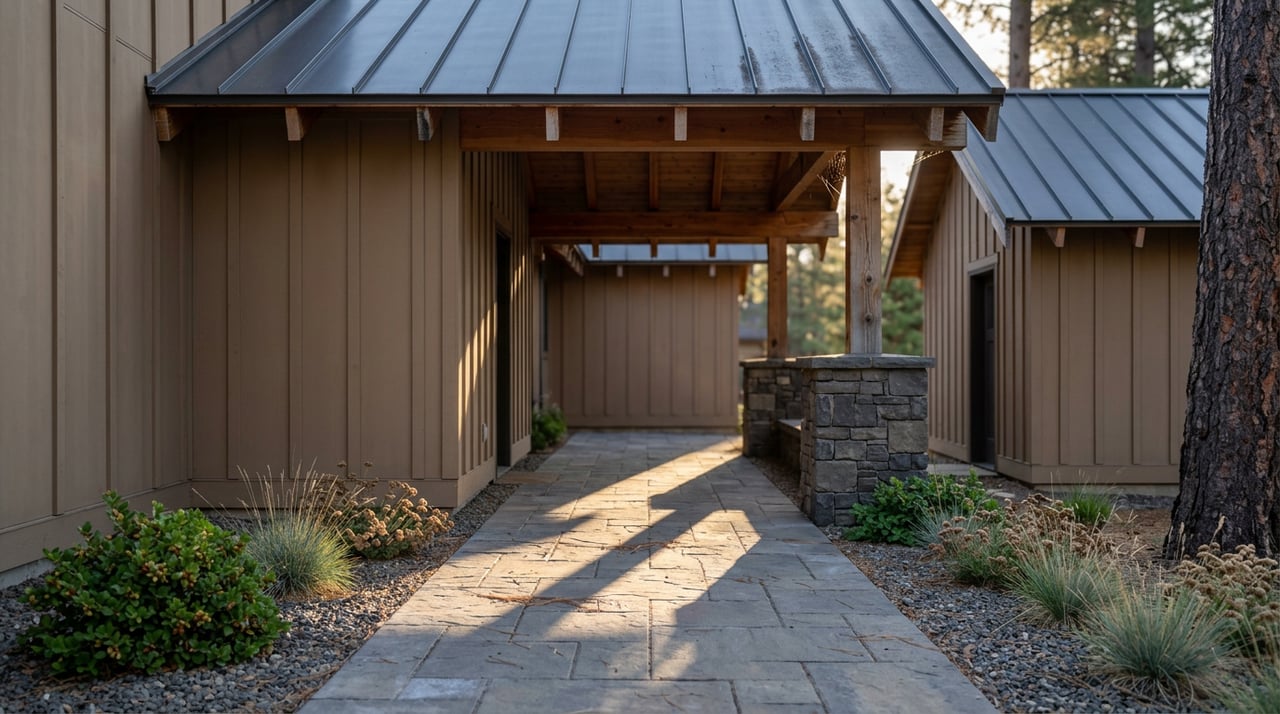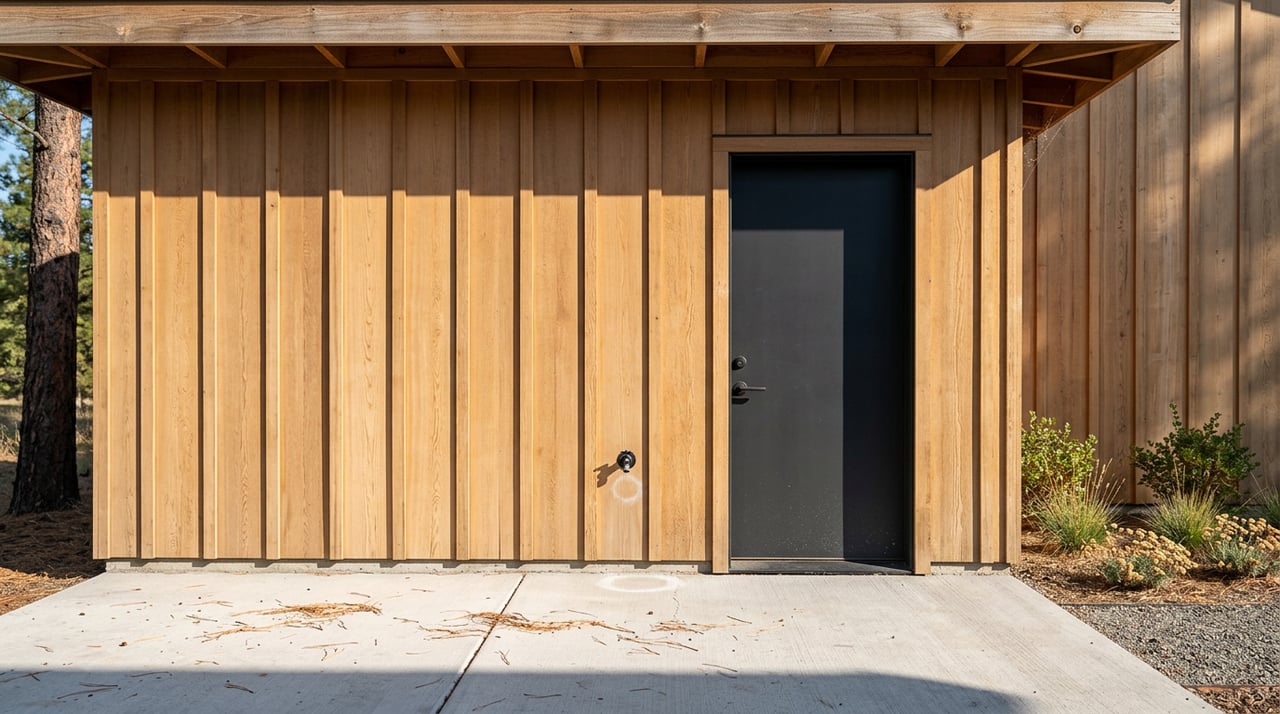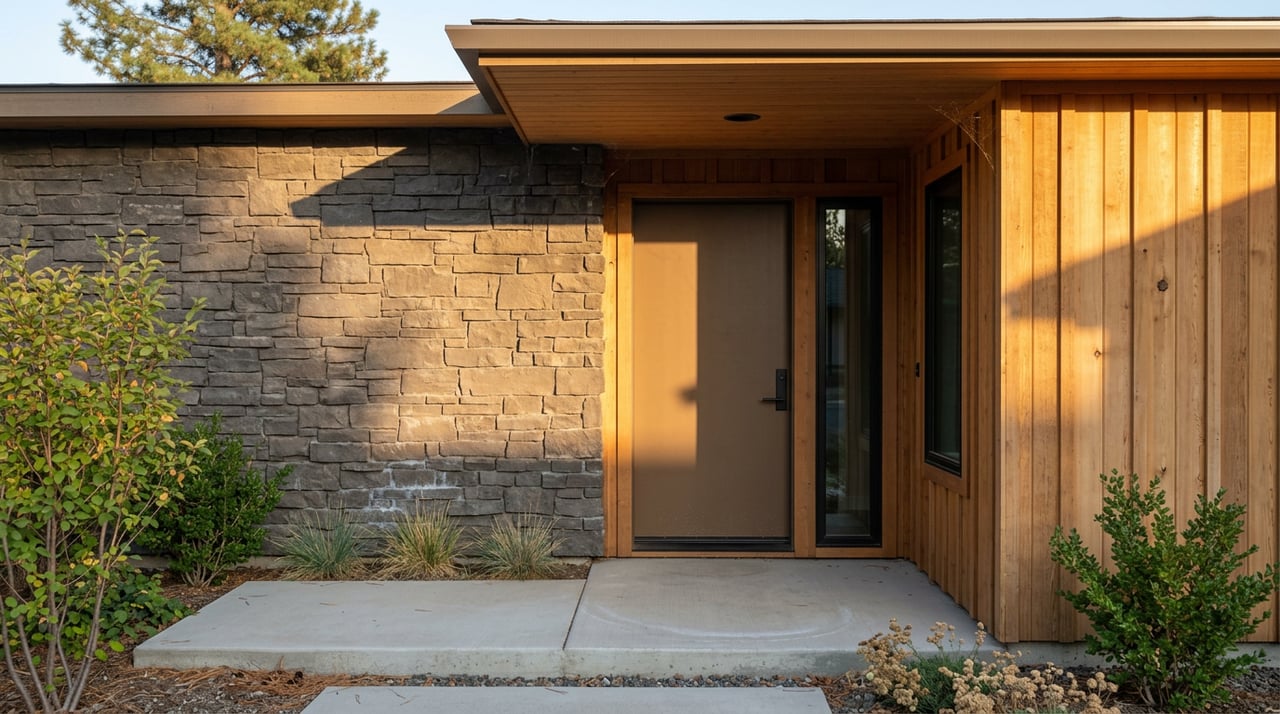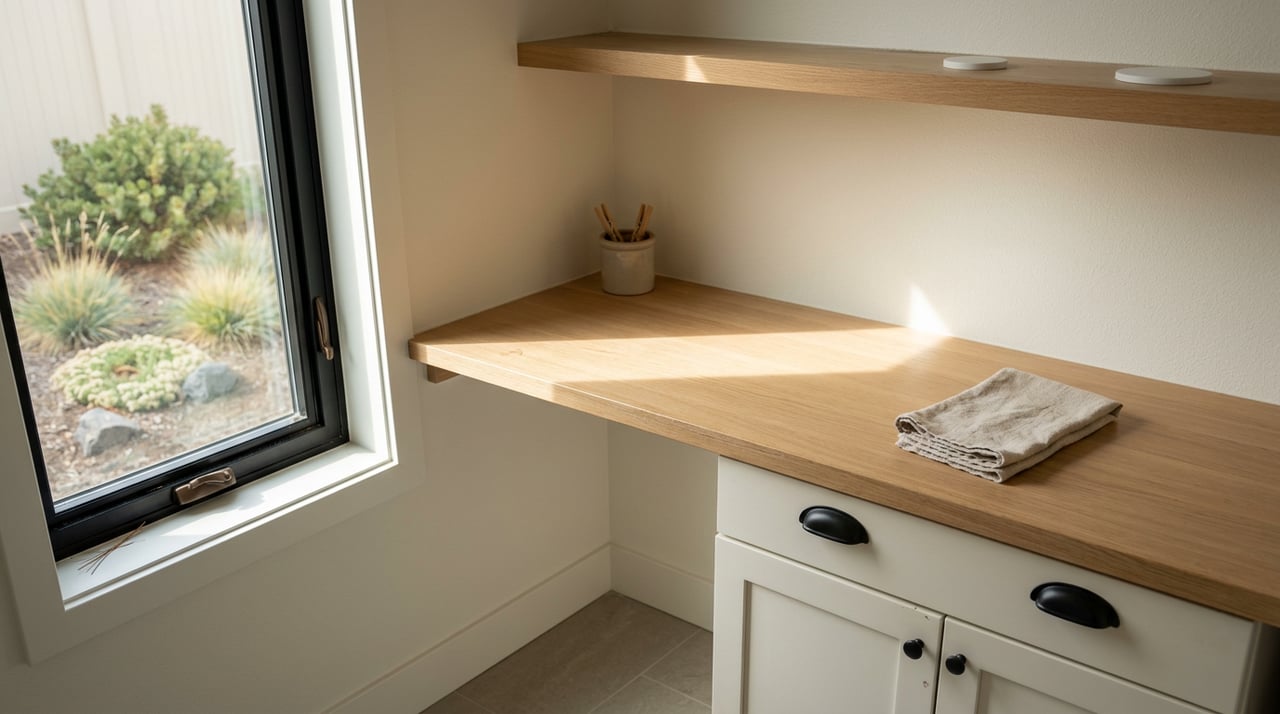
The addendum lands on day four of the inspection period. The buyer's inspector left a small monitor sitting on the lowest livable floor for 48 hours, the lab result came back at 5.8 pCi/L, and now there is a request for a mitigation credit that neither the seller nor the listing agent priced into the deal. Nobody lied. Nobody missed a defect. The house is a well-built 2018 subdivision home on a slab in northwest Redmond. And yet the file is suddenly stuck.
This scenario has become common enough that we want to unpack the mechanism behind it, because the radon question in Redmond behaves differently than most sellers and buyers expect. The reason has less to do with geology than with a line in Oregon's building code that most people have never read.
The statute quirk that shapes every Redmond radon negotiation
Under ORS 455.365, Oregon requires radon-resistant new construction in residences built after April 1, 2013 in seven counties: Baker, Clackamas, Hood River, Multnomah, Polk, Washington and Yamhill. In those seven counties, the builder installs a passive soil-depressurization stub during framing, which means a mitigation retrofit later is largely a matter of adding a fan to a pipe that already runs from sub-slab to roof.
Deschutes County is not on that list. Neither is Crook, Jefferson, or any other Central Oregon county. That statute drew its map from the 1993 USGS radon potential assessment, and the boundary has not moved. Meanwhile the Oregon Health Authority reports that roughly 1 in 3 homes in Oregon have elevated radon levels above the EPA's action level of 4.0 picocuries per liter, and Deschutes is among the Oregon counties with documented elevated radon levels. The result on the ground is that a 2020 build in West Linn already has the plumbing of a mitigation system waiting inside its walls, and a 2020 build off Antler Avenue in Redmond does not.
That is the mechanism. Two homes of similar age and construction, one hour apart on Highway 97, respond to a bad radon test very differently. The Redmond home requires a full retrofit under time pressure.
What the disclosure form actually asks
Oregon's Seller's Property Disclosure Statement, standardized by ORS 105.464, is built on the seller's actual knowledge of the property at the time of disclosure. The Oregon Association of Realtors' 2025 Seller Advisory is direct about where radon sits in that framework: environmental hazards can include indoor air quality issues like radon, mold, or carbon monoxide, and environmental hazards known to the seller must be disclosed to all buyers.
The word to underline there is known. A Redmond seller who has never tested can honestly mark the radon question as unknown. That is legally clean. It is not, however, strategically clean, because the buyer's inspector will almost certainly bring a monitor, and the number will come back before the inspection contingency closes. The seller has now traded the certainty of a known result for the volatility of a number produced during the negotiation window. That trade is where deals go sideways.
Oregon's radon FAQ acknowledges this rhythm plainly, noting that radon measurement companies are often hired when results are needed quickly, like in the 10-day inspection period of a home sale.
How the test actually runs inside the inspection window
The version of a radon test that shows up in a Redmond transaction is not the hardware-store kit that sits in a basement for six months. It is a short, tightly protocoled measurement:
- A continuous radon monitor is placed in the lowest livable level, away from drafts, exterior walls, high heat, and high humidity, per EPA placement guidance for the lowest livable area, keeping windows and outside doors shut except for normal entry and exit, and away from drafts, high heat, high humidity and exterior walls.
- Closed-house conditions apply for at least 12 hours before the test starts and throughout the sampling period.
- The monitor runs for 48 to 72 hours and reports an average concentration.
- If the result lands at or above 4.0 pCi/L, the EPA's recommended action level for corrective action, mitigation enters the negotiation.
- Follow-up protocol depends on the number. State guidance recommends that if a first short-term test result is 4 to 8 pCi/L, follow up with a long-term test; if the first result is 8 pCi/L or above, follow up with another short-term test. In a live transaction there is rarely time for the long-term option, which is part of why the pre-list test carries so much leverage.
The important thing to sit with is the arithmetic of the calendar. A standard 10-business-day inspection contingency does not leave room for a follow-up long-term test. The buyer's team is effectively working from one 48-hour snapshot, and the seller is negotiating against it in real time.
Who actually does this work in and around Redmond
There are several established Central Oregon inspection outfits that pair a home inspection with a radon measurement in a single visit. Naming them matters because the seller who calls one before listing controls the timing:
- Prime Home Inspection, owned by Dave and Carol Peterson, serving Bend, Redmond, Sisters, and all of Central Oregon, offers quick, accurate 48-hour radon testing with detailed results and mitigation recommendations.
- WIN Home Inspection offers Radon Test services in Bend, Redmond, La Pine, Crook, Deschutes, Jefferson and parts of Klamath Counties.
- Healthy Home's Bend office provides certified environmental testing across Deschutes, Crook, and Jefferson counties, including radon and indoor air quality testing.
- Oregon NW Home Inspections, run by Brandon and Jennie Harlan, with Brandon licensed by the Oregon Construction Contractors Board (CCB #204194) and holding Oregon Certified Home Inspector credential OCHI #2316, serves Redmond alongside the rest of Central Oregon.
These names are useful precisely because pricing and turnaround are easier to negotiate when a seller books directly rather than reacting to a buyer's inspector on a compressed clock.
If the number comes back high
Mitigation in a Central Oregon home almost always means active soil depressurization: a vent pipe installed from below the slab up through the roofline, driven by a small in-line fan. It is a well-understood remediation, and the technology itself is not the friction. The friction is the retrofit.
Because Deschutes was not folded into the seven-county radon-resistant-new-construction requirement, most newer Redmond builds do not have the passive stub already in place. That means the crew is core-drilling the slab, routing pipe through interior chases or exterior walls, and coordinating a roof penetration, all inside a repair-negotiation window measured in days.
Sellers who first hear the word radon on day five of the buyer's inspection period are, in effect, hiring a specialty trade under duress. The credit the buyer requests will reflect that. Sellers who tested six weeks before listing get bids in a calm market, choose the tidiest routing, and decide whether to install the system, offer a credit, or price it in from the start.
The pre-list move that changes the math
The playbook here is not complicated. It is just early.
- Order a professional short-term radon test before the sign goes in the yard. State guidance suggests beginning with a short-term test for more immediate results, which is exactly what a pre-list seller wants.
- If the number is below 4.0 pCi/L, note it on the disclosure with the date and the tester. That single line closes a category of buyer inspection anxiety before it opens.
- If the number is at or above 4.0, gather two or three mitigation bids from local licensed installers. Decide, with a listing agent, whether to install before market, offer a documented credit, or reflect it in the list price.
- If time allows and the reading is in the 4 to 8 range, run the long-term test in parallel so the disclosure carries a more stable number.
- Attach the test results to the listing file so buyer agents see them at first showing.
None of this is legal advice, and none of it removes the buyer's right to test again. What it does is shift the negotiation from what do we do about this surprise to here is a documented condition and a documented plan. Those two conversations produce very different closing statements.
Why this matters more in Redmond's mid-2026 market
The urgency of getting ahead of the radon question tracks with where Redmond's market sits today. REMAX Key Properties' May 2026 report put the Redmond median sales price at $496,500, down 5.43% year over year, with the absorption rate at 4.82 months, up 20.2% from 4.01 months one year earlier, indicating a shift toward more balanced market conditions. Beyond Real Estate's July 2026 Redmond snapshot showed an average sale-to-list price ratio of 98.2%, which tells you that well-prepared homes still close near ask but that buyers have room to press on real findings.
In a market with roughly four months of inventory and buyers who are reading inspection reports carefully, an unresolved radon number is exactly the kind of item that trims a percentage point off the sale price or, worse, hands a wavering buyer the reason they were looking for to walk. A pre-list test costs a couple hundred dollars. The negotiating position it protects is worth considerably more.
The larger point is that the radon question in Redmond is not really a health-and-safety story dressed up as a real estate story. It is a real estate story with a health-and-safety trigger, and its outcome is shaped less by what is in the soil than by which side of the transaction runs the clock. Sellers who test early own the clock. Buyers who understand the seven-county RRNC carve-out know why a retrofit here is a bigger ask than the same retrofit in Beaverton, and they can price their own offers accordingly.
If you are thinking about listing a Redmond home this fall or writing offers on one, we would rather have this conversation before the inspection report lands than after. Ninebark Real Estate works Bend, Sisters, Redmond, and the rest of Central Oregon with a preparation-first approach, and a pre-list radon plan is one of the small, unglamorous moves that keeps a transaction calm. Reach out for a free home valuation and we will walk through the disclosure, the timeline, and the local trades who can get the test done before your listing goes live.